- This event has passed.
Mitigating GenAI Vulnerabilities in Biometrics Workshop
26 May
Sydney
DATE
26 May 2026
TIME
12.30 – 17.00
DURATION
Four and a half hours including a short break
LOCATION
Sydney
ABOUT THE WORKSHOP
For the first time we are bringing this workshop to Australia, taking place alongside the annual Asia-Pacific Conference in Sydney. This afternoon workshop will dive into the considerations required to navigate the evolving landscape of AI, deepfakes and biometric security and discuss ways in which AI — specifically, Generative AI (GenAI) — is impacting the field of biometrics.
Speakers will address the following questions:
What are the pros and cons of utilising synthetic biometric data, such as face images, to train and test biometric systems?
Can face examiners detect altered or synthetic faces such as face morphs and deepfakes?
Is Generative AI impacting society’s trust in biometrics?
How can AI be harnessed for enhancing the security and privacy of biometric users?
EXPERT PRESENTERS

Arun Ross is the Martin J. Vanderploeg Endowed Professor at Michigan State University and Site Director of the NSF Center for Identification Technology and Research. He is the recipient of the IAPR Young Biometrics Investigator Award (2013) and the JK Aggarwal Prize (2014), and was named a Kavli Fellow by virtue of his presentation at the 2006 Kavli Frontiers of Science Symposia.
He testified on the topic of biometrics before the U.S. House Science, Space, and Technology Committee in 2022 and the United Nations Counter-Terrorism Committee in 2013. He is the co-author of the monograph “Handbook of Multibiometrics” and the textbook “Introduction to Biometrics.”

Associate Professor Dr Amy Dawel is a clinical and cognitive psychologist at The Australian National University, where she leads the ANU Emotions and Faces Lab. Her research investigates emotion regulation and face perception, with a focus on how these processes support human connection and wellbeing. A current research priority involves understanding how people perceive and interact with AI-generated personas, including the detection of deepfake faces and the potential for human-machine collaboration to improve AI detection capabilities. This work has been featured in outlets such as The New York Times and National Geographic.
Amy is also investigating relationships between AI chatbot use and children’s wellbeing. Her research program is supported by the Australian Research Council and Australian Rotary Health, and has been recognised by the 2022 ACT Tall Poppy and 2024 McMichael Awards.
 Michael King, Professor, Department of Electrical Engineering and Computer Science, Harris Institute for Assured Information – Identity Lab, Florida Institute of Technology (USA). He is also a Distinguished Lecturer for the IEEE Biometrics Council. Dr. King previously served over a decade in the U.S. Intelligence Community, where he led research programs in biometrics, identity, and computational imaging, including IARPA’s BEST Program. He has briefed national leaders and served on a National Academies of Sciences, Engineering, and Medicine committee on face recognition governance. His research spans biometrics, cyber identity, artificial intelligence, and computational psychology.
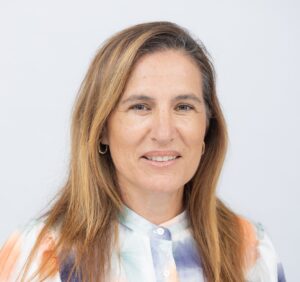
Katina Michael is Professor and Program Director, MBA (Technology and Digital Strategy) at University of Sydney Business School. Katina Michael is the inaugural program director of the MBA (Technology and Digital Strategy) at The University of Sydney Business School. She is professor of Strategy, Innovation and Technology. She connects technical, policy, and public audiences, raising awareness of sociotechnical challenges and how to address them through human-centered systems design. Katina has advised governments and industry worldwide on responsible innovation. Her research helps guide professionals through the complex impacts of AI, automation, and digital transformation.
WHO SHOULD ATTEND?
This event is recommended for anyone involved in the planning, development or operation of a biometric application. It is suitable for delegates who have little or no knowledge of biometric technologies as well as those who have worked with biometrics for a long time. Organisations are therefore encouraged to send a diverse group of personnel, for example, policy makers, operational and technical managers, customer service representatives, human resources, legal, privacy and data protection staff, to facilitate open, balanced and productive conversations. It will help create stronger consensus within your organisation on what good biometrics look like.
The course is highly interactive and participants will be encouraged to bring to bear their own experiences and areas of expertise during the discussion sessions.
REGISTRATION FEES
Members: AU$960.00 incl. GST
Non-members: AU$1,310.00 incl. GST
The Institute seeks to provide a positive, safe and productive environment at our events in order to foster and encourage the exchange of ideas and provide equal opportunities and treatment for all participants. Participants are expected to treat others with respect and consideration. Free and open discussion and debate are important and valued benefits of the Institute’s community.
We ask that all attendees registered for our events note and abide by the Institute’s Code of Conduct so as to ensure a positive, respectful and rewarding experience for all.
IMPORTANT DISCLAIMER NOTIFICATION
The Biometrics Institute provides training and course material as a tool to help you conduct due diligence. While the Institute has used reasonable care to ensure the accuracy of the material and course, due to the content and variable inputs during and after the process of implementing biometrics, the Institute cannot be held accountable for outcomes or compliance. The material and course have been prepared for informational purposes only and are not intended to provide legal or compliance advice. You should consult your legal advisor should you require advice on the legal or compliance aspects of the material or course.